
"Boldness" in Foreign Affairs is Overrated: A Defense of Prudence and Caution


Americans of all stripes applaud boldness in political leaders. I have never heard a politician use the label of “prudent” or “reasonable” in a political advertisement. In every campaign season, however, leading candidates in both parties instead claim to have “bold new ideas” and promise to take “bold action.”
The problem, of course, is that there is a fine line between boldness and recklessness. This is certainly true in deciding how to solve global problems. We face many troublesome countries that threaten our interests over decades, and at some point our patience wears out and we demand bold, decisive action.
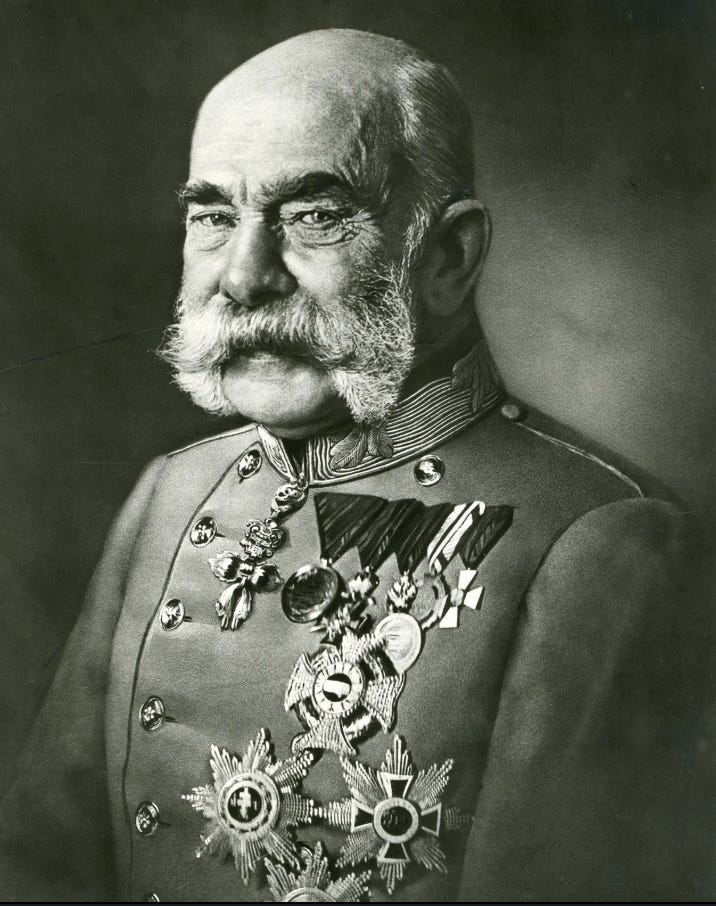
While sometimes bold action is indeed the right course, history is full of cautionary tales. Sometime, the prudent course of action is not bold decisive military action, but more cautious action instead.
My favorite example is the decision of the Austro-Hungarian Empire to take decisive action against Serbia in 1914. Serbia was the leading state sponsor of terrorism in its day. It supported militant groups in the Balkan parts of the Empire for years and by 1914, the Empire had enough. When Archduke Franz Ferdinand, heir to the Austro-Hungarian throne, and his wife were assassinated by a member of one of these groups, the Empire decided to take decisive action designed to utterly destroy Serbia once and for all. The Empire had a powerful military. Serbia did not. The Empire also had the full support of the leading power in Europe—Germany. Accordingly, it issued a set of demands that it knew Serbia could never agree to, and launched a war against Serbia.
What could possibly go wrong?
As we all learned in high school, the result was disastrous for the Austro-Hungarian Empire—and the world. Its decision to launch a war lead to World War I, which ultimately lead to the complete demise of the Empire, the end of the Hapsburg dynasty, and the emergence of Communism in Russia. The resulting conflict also set the stage for the even more destructive World War II.
The Empire, of course, had alternative courses of action. Rather than an ultimatum that Serbia could never accept, the Empire could have used its leverage to get a significant change in Serbian policy. Serbia actually agreed to almost all of the Empire’s demands. This would not have been bold or decisive—and Serbia might well have emerged as a problem in a few years—but it is hard to argue that this option would not have been better for the Austro-Hungarian Empire and the world than the outcome of World War I.
The problem with bold decisions is that there will undoubtedly be unintended consequences that no one at the time can foresee. As Yogi Berra famously said, making predictions is hard—especially about the future.
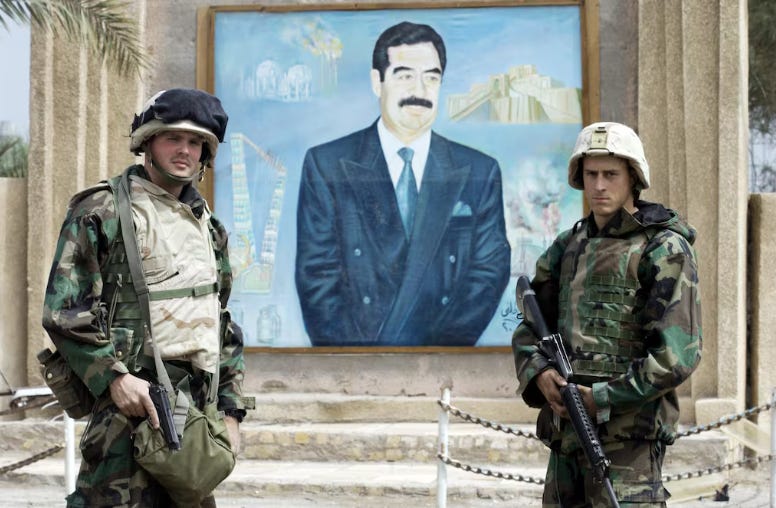
American history, of course, is full of similar examples. President George W. Bush’s decision to destroy the Saddam Hussein regime in Iraq in 2003 was a good example. While we achieved quick victory over Iraqi forces, the aftermath was not pretty. It resulted in both Sunni and Shiite insurgencies that lead to death of thousands of Americans and tens of thousands of Iraqis. It lead to the development of ISIS. It inspired the Arab Spring, which lead to the long Syrian civil war—a war which lead to huge immigration problems in Europe. There was a clear winner in this war—and it was not the US. It was Iran, which now had a friendly Shiite dominated government in Iraq.
This was a war of choice, and a strong case can be made that U.S. interests would have been better served by less “bold” and “decisive action.” We could have continued the policies that were in place in 2003 to contain Iraq—no fly zones in the North and South paroled by US military aircraft, serious and devastating sanctions by most of the world, and covert action to assist those seeking change. It may well be that Hussein might still be in charge today if we had taken this approach, but US interests in a stable Middle East would have been satisfied and neither ISIS nor the Syrian civil war may have resulted. At the very least, thousands of US service members might still be alive.
Sometimes, muddling through is more prudent that bold and decisive action.
Of course, sometimes bold action is required. It would have been a mistake for the US not to enter the conflict in both Europe and the Pacific in World War II. Similarly, allowing Iraq to gain Kuwaiti territory would have had unacceptable long term consequences. Such aggression cannot be tolerated. Given that we had the support of most of the world—supported by a Security Council resolution and the armed forces of many nations—it was prudent to liberate Kuwait. Notably, in doing so, we avoided mission creep—our goal was the liberation of Kuwait and not regime change in Iraq.
The lesson in all of this is that even though we have the strongest military in the world that can defeat any enemy with ease, taking “bold” “decisive” military action is not always in our long term interests. As Secretary Rumsfeld once observed, the biggest concern in any military conflict are the “unknown unknowns.” There can be unintended consequences that are not even in our imagination today. The Austro-Hungarian Empire did not understand the destructiveness of modern warfare. The US did not understand the risks of insurgency and the instability that war would cause in the entire regions. Prudence demands that we always explore other options before we engage in full scale war.
What can the lessons of history teach us about the current war with Iran? As was the case with both the Austro-Hungarian Empire in the opening months of World War I and US forces in the first few months of the Iraq war, it looks so far like a lopsided victory. The lesson of history is that we can be deceived by early easy victory: problems we never anticipated or planned for will undoubtedly arise. The Iran regime may be more resilient that we anticipate requiring ground troops to achieve victory. Iran’s Quds force may engage in acts of terrorism in the US and Europe. We may not be able to reopen the Straits of Hormuz before our allies lose patience. Iranian attacks on oil and gas infrastructure may continue.
In light of these risks, the question is whether there are alternatives that achieve most of our goals short of war. US and Israeli actions had already significantly weakened Iranian power by destroying the nuclear facilities and significantly degrading Iran’s proxy groups in the region. Rather than the war we are now engaged in, perhaps a policy of containment—supported when necessary with both covert action or limited, focused strikes—would better serve our interests than “bold, decisive” action.