
Reflections on America's 250th


Even though I was only a teenager in 1976, I have strong memories of our Bicentennial celebration. It was a unifying event celebrating 200 years as a Nation. Sadly, for a variety of reasons—among others, Trump’s insistence on making this event all about him and our sharply divided politics with deep distrust by both sides against the other—this celebration is anything but unifying.
Even with this missed opportunity, our Nation’s 250th birthday remains a gift: it gives us the opportunity to take our focus away from the troubling present and take a longer view of our Nation. In Air Force lingo, we can “open the aperture.”
There are many ways in which opening the aperture by looking back at our entire 250 year history makes me more optimistic about our future and our ability to move beyond the current President and political divide.
American history is replete with great progress that we can point to with pride. It tells a story of slowly, but surely, making changes to meet the claims made in the Declaration of Independence. We ended slavery. We moved from an electorate made up only of white males to one open to every adult citizen. We moved from Jim Crow to robust civil rights laws.
To me, however, the real comfort of American history is actually the fact that for much of our history, we suffered under really bad Presidents and completely dysfunctional and divisive politics. In fact, one could argue that we suffered more years under awful leadership than great leadership. We not only survived, but thrived.
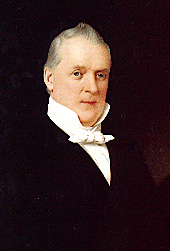
Most of our Presidents were mediocre at best, but many were truly awful. James Buchanan was President during the time when the Southern States were seceding in 1860, but sat by and did nothing. He earlier had lobbied the Supreme Court to rule in favor of nationwide slavery in the Dred Scott decision—which inflamed the sectional tensions over slavery. Franklin Pierce pushed for the Kansas-Nebraska Act of 1954, which undid the Missouri Compromise by allowing territories to vote on whether to permit slavery through "popular sovereignty" and thereby igniting civil war in Kansas. He also stepped up enforcement of the Fugitive Slave Act. Andrew Johnson set back the Reconstruction by undermining protections for newly freed slaves and allowing former Confederate leaders to retake power in many states. The Warren Harding Administration was defined by rampant graft. Andrew Jackson defied the Supreme Court, ordered the disastrous trail of tears, and caused economic chaos (both while in office and decades later) when he dismantled the Second Bank of the United States.
Our politics has also been dysfunctional. The story of the first half of 19th Century until 1860 is the refusal to confront the problem of slavery, and instead delay the full reckoning by unstable compromises. The story of the second half of the 19th Century is that of the broken promises of the Reconstruction and the resulting disenfranchisement of the formerly enslaved. It is also the story of the emergence of Trusts controlled by the very wealthy that dominated the US economy at the expense of the working class. During the first half of the 20th Century, racism led the United States to ban immigration from China and Japan and to sharply limit immigration from anywhere except Northern Europe. Immigrants from Ireland, Italy and Eastern Europe (especially Jews) were viewed as undesirable.
Yet despite this political dysfunction, for 250 years—even during awful leadership—the United States has thrived and improved. We are indeed a much more perfect union than we were when the Constitution was adopted.
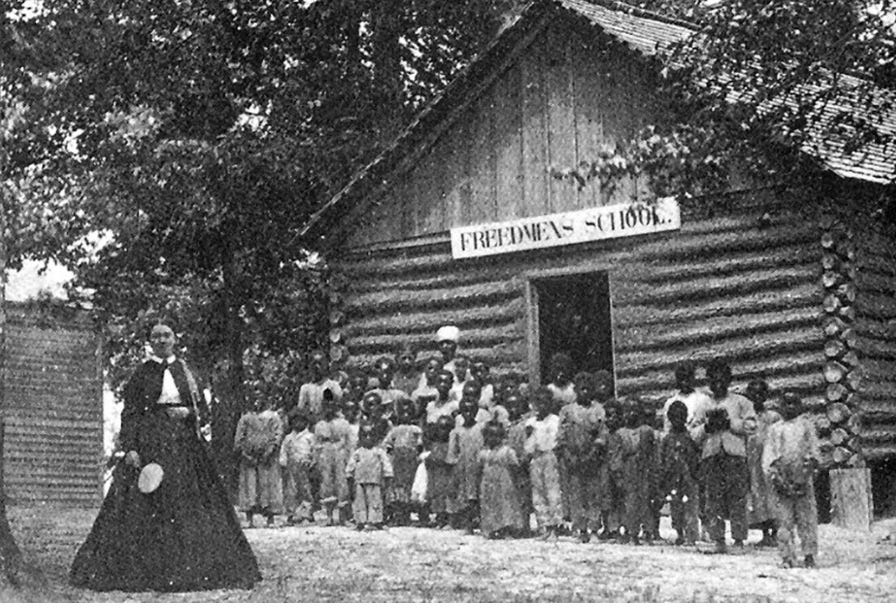
Why have we done so well despite decades of poor political leadership? First, America has always been far more than a political entity. We are a people who have built communities, invented technology, created new businesses, written great books and music. A people that have made huge advances even in the worst of political times. Thanks to ordinary Americans at the local level, even in the dysfunctional 19th Century, Americans developed and invested in the the concept of free public education that made America the most literate population of its time. Taking full advantage of a free market, Americans created a growing and dynamic economy built on innovation. In the 20th Century, the US largely created the motion picture industry that we still dominate today.
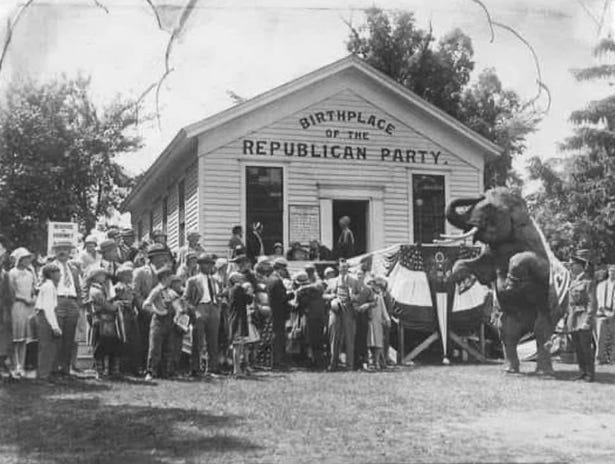
Second, in response to dysfunction, ordinary Americans took action. The issue of slavery was kept on the front burner by ordinary people who organized abolitionist organizations. Ordinary people (including my own ancestors in Indiana) created the Underground Railroad. When it was clear that the Whig and Democratic parties were incapable of addressing slavery, people organized a new party—the Republican Party. This new party was able to win political power in 1860. It used its power to win the Civil War, ended slavery, and for a short time give the newly freed power and opportunity.
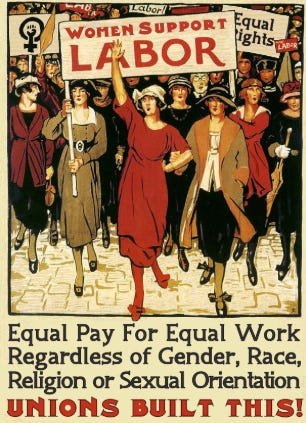
When the power of the robber barons became too powerful, progressives in both major parties rebelled, and were successful in getting labor reforms. Labor unions organized and won major organizing battles. Suffragettes pushed for the right to vote. Civil Rights activists successfully pushed for major civil rights legislation. LGBTQ activists changed popular attitudes toward sexual minorities. They won the right to marry, and even more impressively gained large majority support for same sex marriage.
The lesson from all of this is that the worst times in American history do not define us. Our worst actions do not define us. Certainly, our worst political decisions do not define us. In the worst of times, we still make major accomplishments in our culture, science and economy. And in the worst of times, the best of us take up the gauntlet and fight for change.
Of course, as financial advisers always warn us, past performance is not indicative of future results. Our future may be more bleak than our past. Still, based on 250 years of history, I remain optimistic about our future. At the very least, it tells us that picking up the gauntlet is worth doing.
This brings me to one final observation about our 250 year history. It may seem like 250 years is a long time, but given that the average life expectancy at birth is nearly 80 years, it is really a relatively short time. When my parents died after 82 years and 91 years, they had lived more than one-third of our Nation’s existence. The changes they saw in their life times are awe inspiring: the US became the dominant world power, poverty in the US was cut by over two-thirds, Jim Crow laws went away, women moved toward equality, and members were no longer persecuted.
At 67, I have lived more than one fourth of our Nation’s existence. The changes in my life-time are also awe-inspiring. When I was born, a black citizen in many states could not vote and in even more states discrimination was lawful. Homosexuality was a crime. Women were excluded from most professions. The poverty rate was nearly twice what it is today. The air in most urban areas was polluted and unhealthy. Life expectancy was nearly nine years less than it is today. Infant mortality was five times higher than it is today.
As a Nation, we have made huge improvements in all aspects of our common life in just my lifetime. That should give all of us hope. More importantly, it is a call to action. All of us—in large or small ways—are given an opportunity to be part of our Nation’s history. We can make a difference. Like our forbearers, we need to pick of the gauntlet and fight the good fight.