
The Federal Circuit Holds Trump Tariffs are Unlawful: A Test for the Supreme Court

Right after Trump announced his massive tariffs in April, I argued that there is a strong legal case to be made that the tariffs were not legal. I noted that there “is actually a strong case that the tariffs are not authorized.” As I explained, there is a a complicated set of laws governing the President's authority to issue tariffs that allow the President to impose tariffs on certain industries using a list of particular criteria and only after a process is followed. Trump, however, did not exercise any of these trade authorities in imposing his tariffs--either in the first round or in later tariffs. Instead he relied on the International Emergency Economic Powers Act (IEEPA). The key issue therefore is whether IEEPA gave Trump authority to issue tariffs. I predicted that the courts would answer no.
Sure enough, Democratic Attorneys General and several small businesses (represented by a conservative legal organization) brought a challenge in the Court of International Trade and won, with the court agreeing that the tariffs were unlawful. The Court of International Trade—in a decision by a three judge panel that included Judges appoint by Trump, Reagan and Biden—ruled that IEEPA does not confer “such unbounded authority” and issued a permanent injunction setting aside the challenged tariffs. The challenged tariffs were the fentanyl-related tariffs against Canada, Mexico and China, and the “reciprocal” tariffs issued against the entire world.
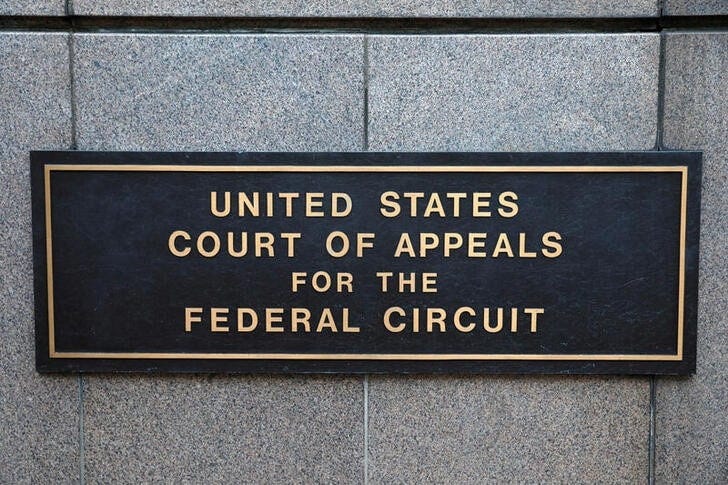
On Friday, the Court of Appeals for the Federal Circuit affirmed this ruling in a 7-4 decision.
There is a complicated set of laws governing the President's authority to issue tariffs. Trump, however, did not exercise any of these trade authorities. Instead he relied on the International Emergency Economic Powers Act (IEEPA). IEEPA is the basis of much of our sanctions on other countries. It allows the President to address unusual and extraordinary threats by declaring a national emergency, and authorizes the President to prohibit or regulate, among other things, "any transactions in foreign exchange" and "importation and exportation" of any property of a foreign national.
The focus of the Federal Circuit was on the text of IEEPA itself. The Trump Administration argued that the power to “regulate” “imports” necessarily included the power to tax or impose tariffs. The Federal Circuit soundly rejected this argument:
The statute bestows significant authority on the President to undertake a number of actions in response to a declared national emergency, but none of these actions explicitly include the power to impose tariffs, duties, or the like, or the power to tax. The Government locates that authority within the term “regulate . . . importation,” but it is far from plain that “regulate . . . importation,” in this context, includes the power to impose the tariffs at issue in this case.
Notably, when drafting IEEPA, Congress did not use the term “tariff” or any of its synonyms, like “duty” or “tax.”
The court noted that “the mere authorization to “regulate” does not in and of itself imply the authority to impose tariffs. The power to ‘regulate’ has long been understood to be distinct from the power to ‘tax.’” The court noted that under the Trump Administration’s argument, the Securities Exchange Commission would have “power to tax substantial swaths of the American economy by granting the SEC the authority to regulate various activities.”
In addition to focusing on the text of IEEPA itself, the court also relied on a relatively new doctrine—the major question doctrine. In in West Virginia v. EPA, the Supreme Court said that where there is something extraordinary about the “history and breadth of the authority” an agency asserts or the “economic and political significance” of that assertion, courts should “hesitate before concluding that Congress meant to confer such authority." In that case, the Court applied this principle to reject the EPA's claim for authority over an issue of "vast economic and political significance" where Congress has not clearly empowered the agency with power over the issue. During the Biden Administration, the Court used this doctrine to strike down several claims of authority--most notably in striking down the Biden Administration's plan to forgive student loans.
The Federal Circuit noted that the economic impact of the Trump tariffs far exceeds those in the recent Supreme Court “major questions” decisions:
Indeed, the economic impact of the tariffs is predicted to be many magnitudes greater than the two programs that the Supreme Court has previously held to implicate major questions. In Alabama Association of Realtors v. Department of Health & Human Services, the Court held that the power to impose “$50 billion in . . . economic impact” was “exactly the kind of power” “of vast economic and political significance” for which it “expect[s] Congress to speak clearly.” 594 U.S. 758, 764 (2021) (per curiam) (internal quotation marks omitted). In Nebraska, the Supreme Court pointed to the “staggering” scope of impact of a program “between $469 billion and $519 billion,” which was “ten times the ‘economic impact’” in Alabama Association that it previously concluded “triggered analysis under the major questions doctrine.” 600 U.S. at 502–03. As noted, the Government’s estimates of the Reciprocal and Trafficking Tariff’s impact are at least five times larger.
The next step will likely be a decision by the Supreme Court. While the Court does not have to the hear the case—it has the option to decline to hear the case and let the Federal Circuit decision stand—it will most likely hear the case given the national importance.
To my mind, this will be a critical test for the Supreme Court. Given its major questions cases, I am guardedly optimistic that a majority of the Court will agree with the Federal Circuit. The notion that Congress simply gave away its Constitutional power over taxation to the President in IEEPA by the vague term “regulate” is simply inconsistent withe the Supreme Court’s decisions during the Biden Administration. For example, in a case concerning student loan forgiveness, the Biden Administration had argued that a statute that allowed the Secretary of Education to “waive or modify” laws and regulations governing student debt gave the Secretary the power to offer loan relief. Based on the major questions doctrine, the Court rejected this argument, explaining that “[h]owever broad the meaning of ‘waive or modify,’ that language cannot authorize the kind of exhaustive rewriting of the statute that has taken place here.”
A principled Court will affirm the Federal Circuit. A political Court will not. It is as simple as that, in my view.