
Thoughts on the Iran-US MOU

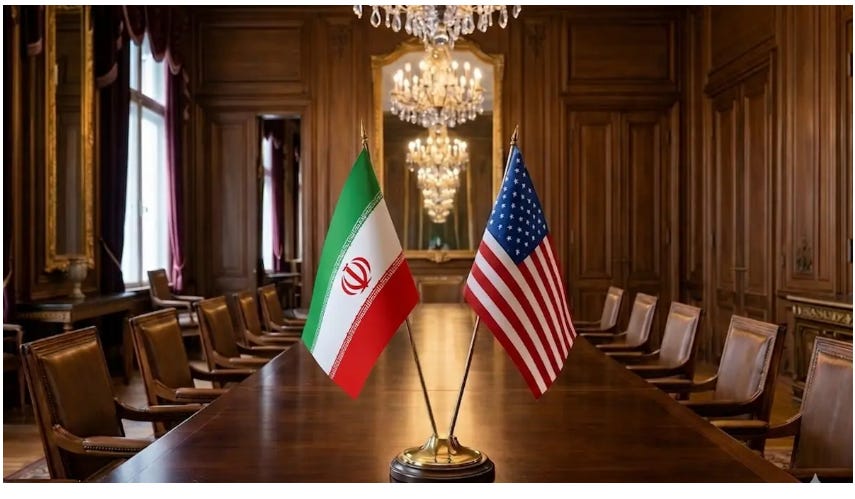
While we don’t yet have the actual MOU between the US and Iran, the text has been read to reporters so we have a pretty clear idea what the MOU says. You can find the text here. As you might expect we have competing claims that this is a “game changing” win for the US and its allies and that it is an abject surrender. The fact is that it is neither—it is merely a ceasefire agreement with the laudable achievement of getting oil flowing again for the next 60 days at least, with most of the challenging issues surrounding Iran’s nuclear program still unsettled. It could indeed result in a game changing final agreement if Iran agrees to remove its processed nuclear material during the next stage of the negotiations. It could also result in a surrender if the negotiations lead to no real change and a weak US response.
It is indeed good news that the Strait of Hormuz will soon be open to traffic, but under the terms of the MOU, Iran can point to concrete “wins”—provisions that improve its position over the case before the war began. Most notably, the MOU provides that “immediately upon the signing of this MOU . . . the U.S. Department of Treasury will issue waivers for the export of Iranian crude oil, petroleum products, and derivatives, and all associated services, including banking transactions, insurances, transportation, etc.” In other words, the US will be granting waivers for the most significant aspect of US sanctions on Iran: sanctions that made it more difficult for Iran to market and sell its oil.
As the New York Times explains:
The U.S. will lift sanctions on Iran’s oil industry when a preliminary deal is signed in what amounts to a major financial win for the country. Iran’s energy industry — the lifeblood of its economy — has been subject to financial restrictions for many years.
Assuming its deal with the United States holds, Iran will probably be able to charge more for the oil it exports and sell that fuel to many more buyers. It is one area where the country appears likely to end the war on better footing than it started.
. . .
U.S. sanctions have forced Iran to send a vast majority of its oil to China, selling the fuel at a steep discount. Chinese refineries have been among the few businesses willing to take the risks associated with violating American policy. The restrictions forced Iran to ship that oil clandestinely on what are known as shadow tankers, which try to hide their whereabouts and ownership. The sanctions have also made it difficult for Iran to be paid in widely used currencies like the dollar or the euro.
Iran can also point to other “wins” as well: after threatening regime change at the outset of the war, the US now agrees to respect Iran’s “sovereignty and territorial integrity and to refrain from interfering in [Iran’s] internal affairs.” Despite the fact that Israel is not a party to this agreement, the agreement purports to apply to Lebanon: it declares “the immediate and permanent termination of military operations on all fronts, including in Lebanon, and undertake from now on not to initiate any war or any military operation against each other and to refrain from the threat or use of force against each other and ensuring the territorial integrity and sovereignty of Lebanon.”
Finally, the MOU sets out US commitments to what it will do after a successful final agreement is reached. “The United States of America undertakes with regional partners to develop a definitive, mutually agreed plan with at least USD $300 billion for the reconstruction and economic development of the Islamic Republic of Iran.” “The United States of America undertakes to make fully available for use the frozen or restricted funds and assets of the Islamic Republic of Iran.”
On the nuclear issue, Iran merely reiterated its previous promise “that it shall not procure or develop nuclear weapons”, but the MOU left the disposition of its existing stock of nuclear materials and Iran’s future enrichment of nuclear materials to negotiations in the next 60 days. The the issue of US sanctions is also left to these negotiations with the US agreeing that it will terminate all sanctions after the US and Iran reach an agreement on the nuclear issues.
To the dismay of our regional allies, the MOU is noticeable silent on important issues—such as Iran’s ballistic missile program and its aggressive behavior in the region.
Of course, all the Iranian “wins” will go away if the parties are unable to reach an acceptable final agreement—in which case, Iran will likely once again close the Strait of Hormuz.
As I noted in previous posts, all recent Presidential Administrations were deeply concerned about Iran and considered military action, but all ultimately determined that a war would not accomplish our strategic objectives. The experience of the Trump Iran bears out that the decision to forego military action was a prudent course of action. The MOU is perhaps read as a “reset" that will allow the parties to engage in the difficult task of reaching a final agreement.
In the end, did the war accomplish anything? There is no doubt that Iran’s military capabilities have been significantly degraded and that the US and Israel won a tactical victory. I suspect, however, that the Iranian regime still views this as a strategic victory. The regime is intact, and is even more hardline than before. While it suffered devastating losses, it showed that it was still able to impose devastating harm to the world economy by closing the Strait of Hormuz. As the Washington Post reported, Iran was also able to keep oil profits flowing despite the US efforts to stop Iran’s oil sales. While the Iranian regime showed remarkable resilience, the U.S. did not: the war was becoming increasingly unpopular in the US.
My concern is that Iran’s leaders will overread their strategic success, and Iran’s new hardline leaders will not easily be persuaded to make concessions. My hope is that the promise of an end to sanctions and the promise of a $300 billion development funds will work as “carrots” even to the hardliners.
I am not confident in the ability of this administration to accomplish a lasting, workable outcome.
Why you lying? This was an embarrassing defeat for the USA and Israel.