
Thoughts on the Iran War

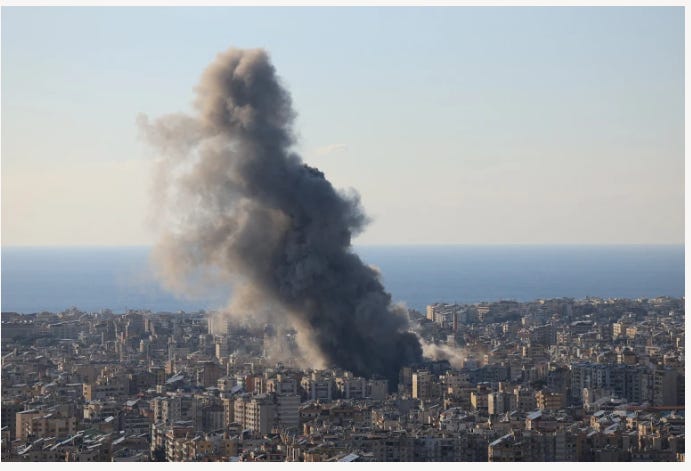
We are in a regional war with Iran that will last weeks, and more likely much longer. Here are my initial thoughts:
First, this action is yet one more step—indeed, a huge step—toward making the rules regarding the initiation of war in both the U.S. Constitution and international law irrelevant.
Let’s start with the Constitution. The Constitution seemingly has a simple allocation of authority: Only Congress has the authority to decide whether to engage in war, but once war is initiated, the President has authority over how that war is fought. As I explained in a previous post, the seemingly simple allocation of authority has eroded significantly in recent years. For decades, all Presidents have asserted—with support from Department of Justice opinions—that Article II of the U.S. Constitution allows the President to employ military force without prior congressional authorization. As a Department of Justice report done at the request of President Obama explained, Article II military force can be used by the President without congressional authorization as long as the military operation “serve sufficiently important interests to permit the President’s action as Commander in Chief and Chief Executive and pursuant to his authority to conduct U.S. foreign relations” as long as the military operation’s “anticipated nature, scope, and duration” did not amount to a “war”.
While it is hard to argue that the current fight against does not amount to war—indeed, Trump is calling this a war—the Obama Department of Justice offered a seriously flawed (at least in my view) opinion that I am sure the Trump Administration will rely on. In a 2011 Opinion by the Department of Justice’s Office of Legal Counsel (OLC) in support of President Obama’s use of military force against Libya, OLC pined that the Libya campaign would not be a war, based largely on the fact that it would be limited to air strikes and not the use of ground troops. In doing so, it relied on military action taken by President Clinton—the 17-day long campaign of NATO airstrikes in Bosnia in 1995 and the two-month bombing of Serbia in in 1999.
Of course, even under OLC’s very permissive standard, the war with Iran pushes the limits. In all of the OLC opinions justifying unilateral Presidential action, OLC has stated that Congress should be involved when the use of military force exposes U.S. military personnel to significant risk over substantial period. As we are seeing already, military personnel are indeed being exposed to significant risk.
As you might expect, this long-line of Presidential assertions of war-making power has been criticized by many scholars and members of Congress. To his great credit, Senator Tim Kaine was as critical of President Obama’s use of military force without congressional authorization as he is now with Trump’s use of military force. Professors Curtis Bradley and Jack Goldsmith (who was head of OLC during the Bush Administration) wrote a persuasive article arguing that the OLC test offers no real limits on the use of force.
The result of this, of course, is that the Constitution’s assignment of the power to initiate war has become a dead letter. How did we get here? Presidents of both parties (including the two Presidents in whose Administrations I worked for) have decided that expediency was more important than the Constitutional framework and OLC’s lawyers have acted as enablers. Courts have ruled that war-making is a political question for the two political branches and will not intervene. While Congress could push back, Congress does not want to act. Decisions about the use of force can all too easily backfire politically. Democrats who supported the authorization of use of force against Iraq took much heat once the war turned out to be unpopular. Sadly, many members of Congress have learned that the safest action is to allow Presidents to act unilaterally—perhaps kibitzing on the sidelines. Only a few leaders—Senator Tim Kaine being the best example—has asserted that Congress must take its war power more seriously.
This is unfortunate, because the Founders decision to vest the war-making authority in Congress has great merit. When Congress acts, this generally means that the country will support the fight. Congressional authorizations of the use of force usually are the result of weeks of debate that allow the American people to weigh in, and the process illuminates the risks—and goals—of the military action. A unilateral decision to go to war by the President after no debate or discussion is a recipe for disaster. The Libya engagement is a good example—it was a tactical military victory, but a huge strategic misstep. The result has been that Libya is now dominated by warring factions and it is a source of instability in North Africa.
When the dust settles, we need to find a way to restore the original Constitutional framework.
What about international law? In my view—and the views of most other experts—the U.S. attack on Iran violated international law. I gave a primer on the relevant international law principles in a previous post, but here is a summary.
In the modern era, the critical legal document is the U.N. Charter. Adopted after the horrific experience of World War II, the Charter is imposes a very restrictive view of when a nation can engage in the use of force. It provides that “All Members shall refrain in their international relations from the threat or use of force against the territorial integrity or political independence of any state, or in any other manner inconsistent with the Purposes of the United Nations.” The only exceptions are the use of force authorized by the Security Council and the right of individual and collective self defense.
The rules for use of military force can be summarized as follows: Absent approval by the Security Council, the use or threat of military force against another nation (or its territory) is unlawful unless it is done in self-defense. The right of self-defense, however, is limited—there must be an actual attack or an imminent attack. Preemptive war is not allowed. Secretary Rubio argues that the US had intelligence that Iran would attack U.S. interests if Israel attacked Iran. This is a bizarre claim of self-defense. We are justifying a unilateral attack on Iran based on what we think might happen if Israel violated the UN Charter.
As with the Constitutional legal issues, however, the U.S. has a history of ignoring these international law principles—even though the U.N. Charter is a Treaty that has the force of law in the United States. As I argued in a previous post, this is unfortunate because the UN Charter approach to conflict greatly benefited US interests since World War II and resulted in far fewer state against state wars than in the past. If we stop complying with international law, other states—large and small—will have no reason to comply as well. The pre-1945 “might makes right” world did not advance US interests, and that is why the US supported the UN Charter. The use of power in violation of international law may be appealing in the short term, but history teaches that the US is better off in the more peaceful and stable world created by the US and its allies in 1945.
Second, I have doubts about the wisdom of this war. The Iranian regime was awful to its people and was a major source of instability in the regions. I also have little doubt that the U.S. military will achieve most of its goals for this mission—the already degraded nuclear program will be further degraded, Iran’s drome and missile manufacturing capacity will be destroyed, and its Navy will be destroyed. This would be a wonderful thing, but there are serious risks to the U.S. and its allies in the region.
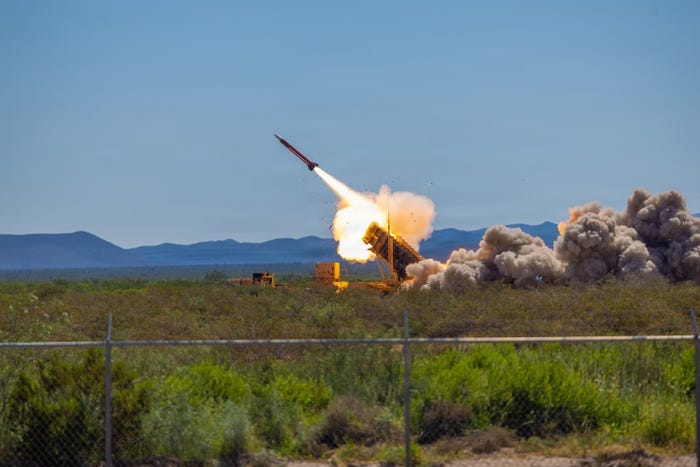
Iran has a huge force of missiles and drones. Iran is believed to possess between 1,500 ballistic missiles and 2,000 ballistic missiles, as well as drones and shorter-range rockets capable of striking U.S. bases and Gulf energy infrastructure. While the US and its allies have robust air defense systems, these systems rely on air defense munitions, and the US faces significant strain on these munitions. There are reports that the Chairman of the Joint Chief of Staff warned the White House that there was risk that the munitions stockpile would not be sufficient for a long conflict. Military experts, for example, estimate that a high-intensity war with Iran could use up a full year’s production of Patriot missiles in a matter of weeks.
To deal with this issue, both Israel and the U.S. are trying to destroy Iran’s missile and drone capability. This is thus a race—will we be able to destroy Iran’s capability before we can no longer defend ourselves against Iranian attacks? It is not all clear that we will be able to achieve our strategic objectives and destroy Iran’s offensive capabilities before our air defense munitions (and those of our allies) run out. This is a huge risk because without air defense, there could be devastating attacks on US military bases and on oil and gas infrastructure.
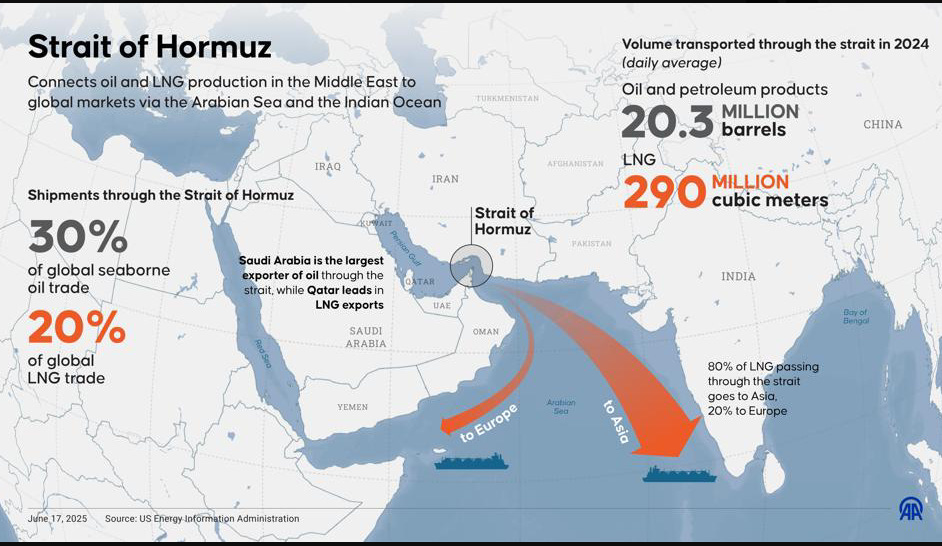
Indeed, we are already seeing an adverse impact on world oil and gas markets. Iranian threats have shut down all shipping through the Strait of Hormuz. Given that 30% of all oil shipping and 20% of all natural gas shipping goes through the Strait, this could have a large impact on the world economy. Oil and gas prices are already rising as a result. This will mean much higher costs at the pump in the US, but the economic consequences could be even more severe. There is also a huge geopolitical impact of this: Russia depends of oil and gas to build its military and higher prices will mean Russia will have far more resources.
Finally, if the war results in regime change in Iran, it will likely not be regime change we would like to see. The lesson of history is that air power alone will result in the already powerful becoming even more powerful. The US air war in the aftermath of the first Iraq War only strengthened Hussain’s hold on power. If you want to control who takes power, you need ground troops. Absent the commitment of ground troops, who would take power? Most experts agree that the hard-line Iranian Revolutionary Guard Corps are in the best position to be in power.
I understand the desire for decisive action against Iran, but it is not clear to me that in the end this war will advance U.S. interests. In the past year, Iranian power in the region had already been seriously degraded, and we had the capacity to take targeted action when necessary. The result was not pretty, and the regime remained in place, but Iran was largely contained. The case for this war is thus hard to make. I hope I am proved wrong, but I fear that we will soon come to regret this war.
Excellent article, and I'm not saying that simply because I worked some of these issues during my tenure as a government lawyer and agree with everything you say.
While the legal status of this war is important, focus should also remain on the practical consequences of Trump's decision to initiate hostilities without providing a specific justification for the use of military force and a clear statement of the mission, the military and political objectives and a statement of what will constitute victory.
As you state, the founding fathers intentionally separated the power to decide to go to war (i.e. declare war) from the responsibility to conduct the war (the commander in chief). This not only reflected their inherent suspicion of vesting the awesome war power entirely in the Chief Executive. It also had a practical component of requiring the President to justify his call to arms, delineate the objectives and purposes for going to war, and outline, at least in general terms the military and political objectives. In other words, the Founders wanted to make sure that any decision to go to war was well conceived and thought-out and had the support of the People, or at least their representatives in Congress, before the conflict began.
Trump has been unable, or unwilling to meet these Constitutional obligations. To the contrary his statements regarding the campaign have swung wildly in just a few days. For example, he has changed his estimate of the duration of the campaign from a few days to four to six weeks, or more. Similarly, he has stated that removal of the current Iranian regime is an objective of the war, only to say a few days later, that there are members of the current regime he could work with and would likely allow to continue in power.
Is Trump intentionally trying to keep this information from the Congress and American people, or is he truly operating without any strategic or tactical plan or objectives? Neither is a particularly comforting possibility. Either could be grounds for removing him from office.
Trump and his "advisors"appear to have learned many of the lessons from Viet Nam, Iraq I, Iraq II and Afghanistan and are hell-bent on repeating those mistakes, exactly. Such a "make-it-up" as we go along approach to the conduct of war rarely ends well. As the old Viet Nam related adage goes: "How will they be able to tell they are lost, if they don't know where they want to go."
There was a months long military build up before the Israeli government decided to strike. This gave the Administration ample time to get an authorization for use of military force. I suspect it would have had bipartisan support (including Schumer). The IRG includes elements that could be even more reckless than the old leadership.